


Page 173 - Demo
P. 173
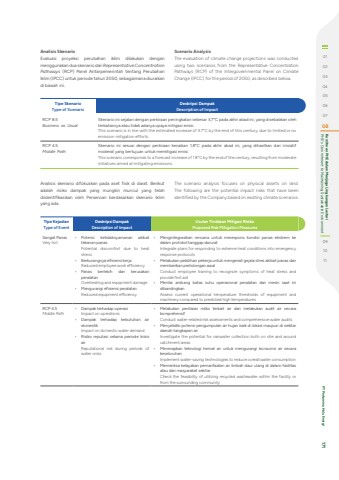
Tipe SkenarioType of ScenarioDeskripsi DampakDescription of ImpactRCP 8.5Business as UsualSkenario ini sejalan dengan perkiraan peningkatan sebesar 3,7%u00b0C pada akhir abad ini, yang disebabkan oleh terbatasnya atau tidak adanya upaya mitigasi emisi.This scenario is in line with the estimated increase of 3.7%u00b0C by the end of this century, due to limited or no emission mitigation efforts.RCP 4.5Middle PathSkenario ini sesuai dengan perkiraan kenaikan 1,8%u00b0C pada akhir abad ini, yang dihasilkan dari inisiatif moderat yang bertujuan untuk memitigasi emisi.This scenario corresponds to a forecast increase of 1.8%u00b0C by the end of the century, resulting from moderate initiatives aimed at mitigating emissions.Analisis skenario difokuskan pada aset fisik di darat. Berikut adalah risiko dampak yang mungkin muncul yang telah diidentifikasikan oleh Perseroan berdasarkan skenario iklim yang ada.The scenario analysis focuses on physical assets on land. The following are the potential impact risks that have been identified by the Company based on existing climate scenarios.Analisis SkenarioEvaluasi proyeksi perubahan iklim dilakukan dengan menggunakan dua skenario dari Representative Concentration Pathways (RCP) Panel Antarpemerintah tentang Perubahan Iklim (IPCC) untuk periode tahun 2050, sebagaimana diuraikan di bawah ini.Tipe KejadianType of EventDeskripsi DampakDescription of ImpactUsulan Tindakan Mitigasi RisikoProposed Risk Mitigation MeasuresSangat PanasVery hot%u2022 Potensi ketidaknyamanan akibat tekanan panasPotential discomfort due to heat stress%u2022 Berkurangnya efisiensi kerjaReduced employee work efficiency%u2022 Panas berlebih dan kerusakan peralatanOverheating and equipment damage%u2022 Mengurangi efisiensi peralatanReduced equipment efficiency %u2022 Mengintegrasikan rencana untuk merespons kondisi panas ekstrem ke dalam protokol tanggap daruratIntegrate plans for responding to extreme heat conditions into emergency response protocols%u2022 Melakukan pelatihan pekerja untuk mengenali gejala stres akibat panas dan memberikan pertolongan awalConduct employee training to recognize symptoms of heat stress and provide first aid%u2022 Menilai ambang batas suhu operasional peralatan dan mesin saat ini dibandingkanAssess current operational temperature thresholds of equipment and machinery compared to predicted high temperaturesRCP 4.5Middle Path%u2022 Dampak terhadap operasiImpact on operations%u2022 Dampak terhadap kebutuhan air domestikImpact on domestic water demand%u2022 Risiko reputasi selama periode krisis airReputational risk during periods of water crisis%u2022 Melakukan penilaian risiko terkait air dan melakukan audit air secara komprehensifConduct water-related risk assessments and comprehensive water audits%u2022 Menyelidiki potensi pengumpulan air hujan baik di lokasi maupun di sekitar daerah tangkapan airInvestigate the potential for rainwater collection both on site and around catchment areas%u2022 Menerapkan teknologi hemat air untuk mengurangi konsumsi air secara keseluruhanImplement water-saving technologies to reduce overall water consumption%u2022 Memeriksa kelayakan pemanfaatan air limbah daur ulang di dalam fasilitas atau dari masyarakat sekitarCheck the feasibility of utilizing recycled wastewater within the facility or from the surrounding communityScenario AnalysisThe evaluation of climate change projections was conducted using two scenarios from the Representative Concentration Pathways (RCP) of the Intergovernmental Panel on Climate Change (IPCC) for the period of 2050, as described below.0102030405060708 PHE's Commitment to Maintaining Sustainable Environment Komitmen PHE dalam Menjaga Lingkungan Lestari091011 PT Pertamina Hulu Energi 171


