


Page 205 - Demo
P. 205
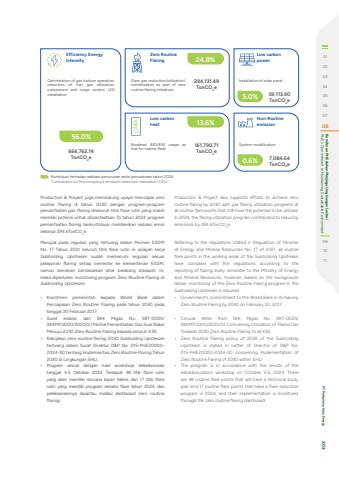
Merujuk pada regulasi yang tertuang dalam Permen ESDM No. 17 Tahun 2021 seluruh titik flare rutin di wilayah kerja Subholding Upstream sudah memenuhi regulasi sesuai pelaporan flaring setiap semester ke kementerian ESDM, namun demikian berdasarkan latar belakang dibawah ini, maka diperlukan monitoring program Zero Routine Flaring di Subholding Upstream.%u2022 Komitmen pemerintah kepada World Bank dalam Pencapaian Zero Routine Flaring pada tahun 2030 pada tanggal 20 Februari 2017.%u2022 Surat edaran dari SKK Migas No. SRT-0025/SKKMF0000/2020/S1 Perihal Pemanfaatan Gas Suar Bakar Menuju 2030 Zero Routine Flaring kepada seluruh K3S.%u2022 Kebijakan zero routine flaring 2030 Subholding Upstream tertuang dalam Surat Direktur D&P No. 015-PHE20000-2024-S0 tentang Implementasi Zero Routine Flaring Tahun 2030 di Lingkungan SHU.%u2022 Program sesuai dengan hasil workshop dekarbonisasi tanggal 3-5 Oktober 2023. Terdapat 38 titik flare rutin yang akan memiliki rencana kajian teknis dan 17 titik flarerutin yang memiliki program reduksi flare tahun 2024, dan pelaksanaannya dipantau melalui dashboard zero routine flaring.Referring to the regulations stated in Regulation of Minister of Energy and Mineral Resources No. 17 of 2021, all routine flare points in the working areas of the Subholding Upstream have complied with the regulations according to the reporting of flaring every semester to the Ministry of Energy and Mineral Resources, however, based on the background below, monitoring of the Zero Routine Flaring program in the Subholding Upstream is required.%u2022 Government%u2019s commitment to the World Bank in Achieving Zero Routine Flaring by 2030 on February 20, 2017.%u2022 Circular letter from SKK Migas No. SRT-0025/SKKMF0000/2020/S1 Concerning Utilization of Flared Gas Towards 2030 Zero Routine Flaring to all K3S.%u2022 Zero Routine Flaring policy of 2030 of the Subholding Upstream is stated in Letter of Director of D&P No. 015-PHE20000-2024-S0 concerning Implementation of Zero Routine Flaring of 2030 within SHU.%u2022 The program is in accordance with the results of the decarbonization workshop on October 3-5, 2023. There are 38 routine flare points that will have a technical study plan and 17 routine flare points that have a flare reduction program in 2024, and their implementation is monitored through the zero routine flaring dashboard.Optimization of gas turbine operation, reduction of fuel gas utilization, compressor anti surge control, LED installation664,762.14TonCO2e161,790.71TonCO2e7,084.64TonCO2e59,113.90TonCO2e294,131.49TonCO2e13.6%5.0%0.6%56.0%Kontribusi terhadap realisasi penurunan emisi perusahaan tahun 2024Contribution to the company%u2019s emission reduction realization 2024Flare gas reduction/utilization/monetization as part of zero routine flaring initiativesZero Routine FlaringLow carbon heatEfficiency Energy IntensityLow carbon powerNon-Routine emission Installation of solar panelBiodiesel B30/B35 usage as fuel for marine fleetSystem modification24.8%Production & Project juga mendukung upaya mencapai zero routine flaring di tahun 2030 dengan program-program pemanfaatan gas flaring diseluruh titik flare rutin yang masih memiliki potensi untuk dimanfaatkan. Di tahun 2024 program pemanfaatan flaring berkontribusi memberikan reduksi emisi sebesar 294 kTonCO2e.Production & Project also supports efforts to achieve zero routine flaring by 2030 with gas flaring utilization programs at all routine flare points that still have the potential to be utilized. In 2024, the flaring utilization program contributed to reducing emissions by 294 kTonCO2e.0102030405060708 PHE's Commitment to Maintaining Sustainable Environment Komitmen PHE dalam Menjaga Lingkungan Lestari091011 PT Pertamina Hulu Energi 203


