
What is CCS?
Carbon Capture and Storage (CCS) is one of the key technologies used to reduce carbon dioxide (CO₂) emissions, which are a primary driver of climate change.
CCS works by capturing CO₂ generated from industrial activities such as power plants, manufacturing facilities, and refineries. Once captured, the CO₂ is transported and stored deep underground, typically in secure and well-sealed geological formations.
Through CCS, CO₂ is prevented from being released into the atmosphere, thereby helping to mitigate global warming while continuing to support industrial activities and energy security.
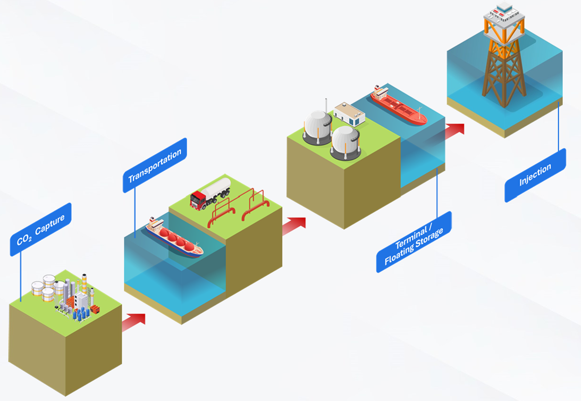
CCS Value Chain :
- CO₂ Capture
At this stage, CO₂ is captured directly from emission sources such as power plants, factories, or industrial facilities. CO₂ that would otherwise be released into the atmosphere is separated and collected using specialized technologies. - CO₂ Transportation
After capture, the CO₂ is transported using ships, trucking, pipelines or other safe and controlled modes of transport, depending on distance and regional conditions. - Terminal / Floating Storage
CO₂ is temporarily received, handled, and stored at an onshore terminal or floating storage facility before final injection. These facilities function as intermediate hubs to manage logistics, regulate pressure and volume, and ensure safe and continuous transfer to injection sites. - CO₂ Storage
The CO₂ is then injected and stored deep underground in stable and well-sealed geological formations, such as depleted reservoirs. The storage system is designed to ensure that the CO₂ remains secure and does not leak into the environment.
Share: